Can they get it together in time for the midterms?
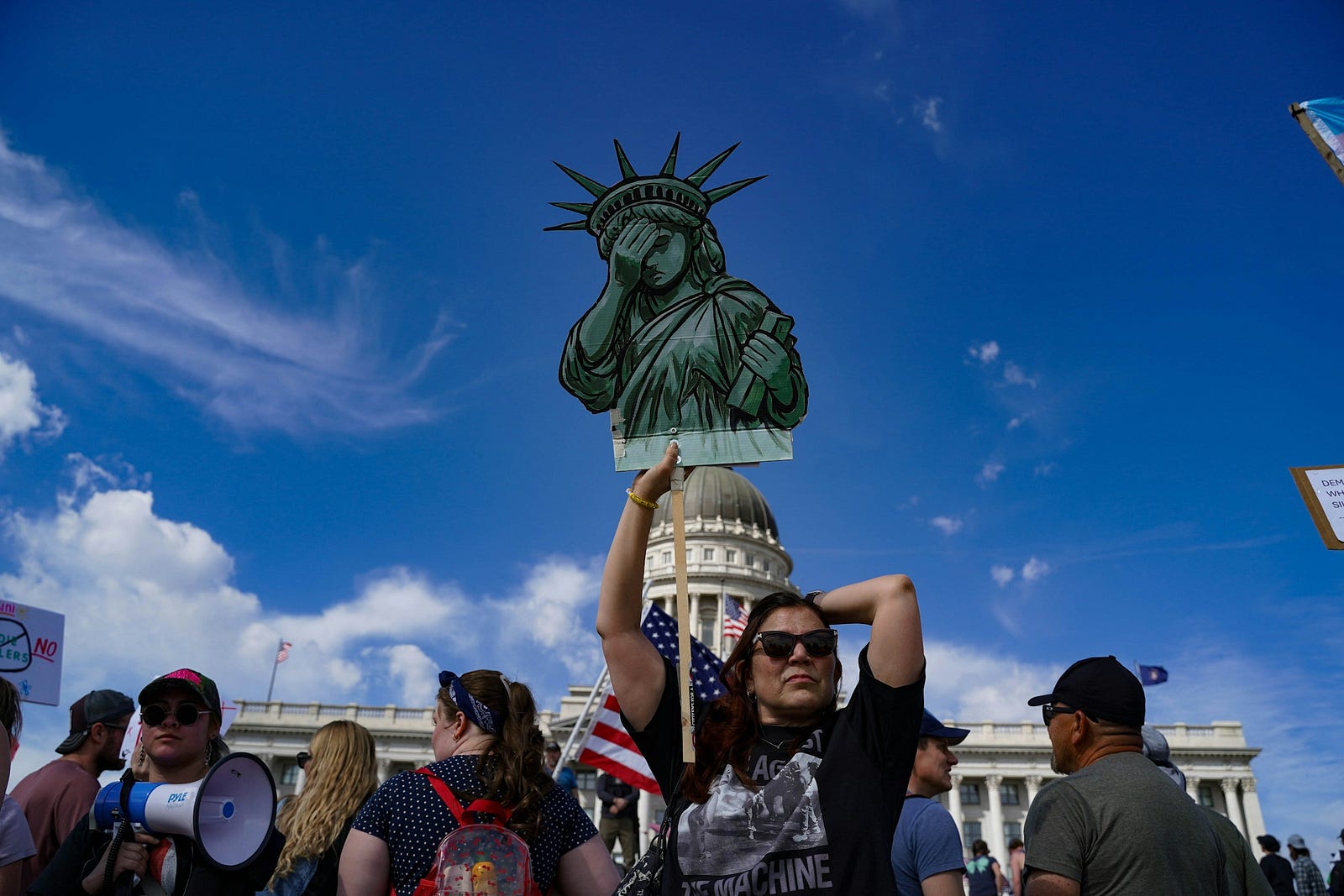
Political parties always fight with themselves. Coalitions are messy by nature. They argue over candidates, slogans, priorities, and tactics. That is normal. What is happening inside the Democratic Party now looks different.
This is no longer a normal internecine debate. It is a fight over who controls the future of the Democratic Party — and who gets to belong to it.
For years, Democratic leaders tried to manage the left flank. They used activist energy when it suited them, tolerated radical rhetoric when it was aimed at Republicans, and assumed the party establishment would remain in charge when the dust settled. But movements do not always remain pressure groups. Sometimes they become machines.
That is what appears to be happening now.
In New York, Mayor Zohran Mamdani has quickly become more than a progressive symbol. His endorsed candidates swept three closely watched Democratic congressional primaries, defeating establishment-aligned rivals and humiliating old power centers in their own backyard. Brad Lander defeated Rep. Dan Goldman. Darializa Avila Chevalier defeated Rep. Adriano Espaillat. Claire Valdez won her race as well. Together, they announced something larger than local dissatisfaction.
They announced that the insurgent left can organize, recruit, endorse, and win.
Van Jones said the quiet part out loud on CNN. Watching the New York results come in, he described the night as a direct battle between the Democratic establishment and the insurgency. “The roof is collapsing on the Democratic Party establishment,” he said. More importantly, he called the Mamdani wing “a movement and a machine at the same time.”
That phrase captures the shift. A movement protests. A machine wins elections.
The Democratic establishment still has money, titles, committee assignments, and institutional memory. But the left now has something more dangerous: momentum. It has candidates who can beat incumbents. It has activists willing to punish insufficiently loyal Democrats. It has online influencers, city-level power, national ambition, and a plan for 2028.
The Democratic Socialists of America are already talking openly about putting one of their own on the presidential primary debate stage. They are surveying chapters, collecting input, and preparing for a national decision. Alexandria Ocasio-Cortez may be the obvious figure, but the process itself is the point. DSA is not waiting for permission from Chuck Schumer, Hakeem Jeffries, or the Democratic National Committee. It is building its own center of gravity.
That creates a serious problem for Democrats outside the deepest blue districts. A platform that wins a New York primary may not win a general election in Pennsylvania, Nevada, Maine, or Michigan. The party’s professional class knows this, which is why the Maine situation is so revealing.
In Maine’s 2nd District, the DCCC-backed candidate lost the Democratic primary to progressive Matt Dunlap. Now Democratic leaders must decide whether to pour money into a Trump-won district with a nominee they did not want. If they fund him, they risk wasting precious resources in a difficult race. If they do not, progressives will accuse them of sabotaging their own nominee.
That is the power struggle in miniature. The left can win the nomination. The center still controls much of the money. Neither side fully trusts the other.
Lanny Davis, speaking from the Clinton wing of Democratic politics, has offered the moderate answer: return to a Third Way message, emphasize fiscal responsibility, stop making the most unpopular cultural positions into litmus tests, and elevate Democratic governors who actually know how to win broader electorates. His argument is not that Democrats should become Republicans. It is that Democrats need to sound like a governing party again.
But the left’s answer is almost the opposite. It believes Democrats lose because they offer too little, not because they go too far. It sees moderation as surrender. It sees caution as cowardice. It sees the old establishment as morally compromised and electorally exhausted.
That is why this fight is so hard to resolve. It is not merely about policy. It is about legitimacy.
The Scott Wiener incident in San Francisco shows how far the logic can go. Wiener is not a conservative. He is an out gay Jewish Democrat with a long record of support for transgender rights. Yet he says he was chased from the San Francisco Trans March by protesters angry over Gaza. If even a progressive lawmaker with deep LGBTQ credentials can be declared unwelcome in a progressive space, then the coalition is not simply debating policy anymore. It is enforcing belonging.
That should alarm Democrats who remember how winning coalitions are built. A party cannot survive as a series of purity tests. It cannot win national power if every disagreement becomes a moral excommunication. And it cannot govern if its loudest factions believe persuasion is weakness.
The Democratic Party is facing a choice. It can remain a broad coalition capable of winning competitive elections, or it can become a narrower ideological movement with sharper edges and fewer converts.
The establishment thought it could manage the insurgency. The insurgency now intends to manage the party.
(Contributing writer, Brooke Bell)